 admin
adminKUALA LUMPUR: The Malaysian Employees Association (Karyawan) has asked the government to take control of the mechanism for collecting and distributing music royalties to address various issues that have plagued the industry for more than two decades.
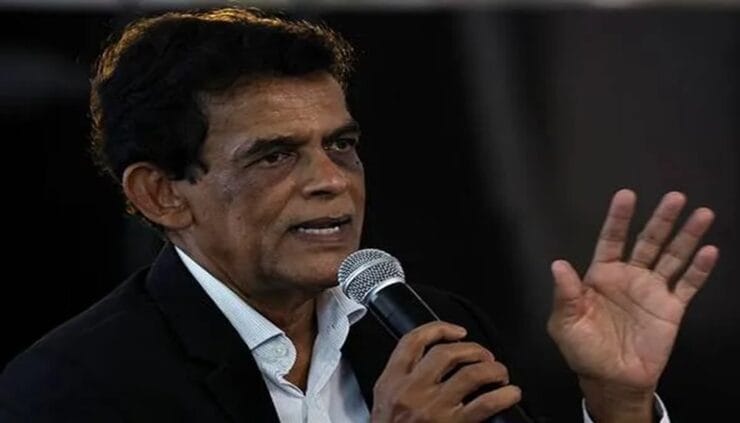
Karyawan President Datuk Freddie Fernandez, in a statement today, said the resolution was among those unanimously approved at the association’s Annual General Meeting.
The proposal takes the example of the Indonesian model which established the National Collective Management Board (LMKN) to centrally manage the collection of public performance royalties.
“Indonesia faced similar issues until the government resolved them by taking over all royalty collections from existing collecting bodies,” he said.
According to Freddie, with royalties collected from public performances reaching almost RM200 million a year, it is time for Malaysia to reform the royalty collection and distribution system to be more fair, transparent and accountable.
He said that the music industry has long faced various complaints regarding the transparency of royalty management, high administrative costs, fragmented collection structures and disputes between collective management organisations and industry players regarding the distribution of royalties.
Apart from that, Karyawan also proposed that the government develop a centralized digital royalty management platform operated under government supervision for music rights registration, usage tracking, royalty calculation and distribution.
“This proposed platform will function as a national music rights library and royalty distribution system managed by the government, with every musical work, sound recording, rights ownership structure, licensing records, usage reports, collection amounts and distribution payments recorded, verified and auditable,” he said.
He said the system allows each use of a song to be matched with the legitimate rights holder, thus ensuring that royalties are calculated and distributed automatically based on verified ownership data and actual usage.
This approach can reduce duplication of administrative processes, increase transparency and provide a clear audit trail to governments, rights holders, users and stakeholders, said Freddie.
“This system will also, to a certain extent, control the use of AI (artificial intelligence) generated music – something that is likely to happen if no action is taken,” he said.
Freddie said the government-supervised model is in line with the Copyright (Collective Management Organisations) Guidelines 2025 as it is able to strengthen governance, transparency, record keeping, reporting and accountability in royalty management.
It is clear that the proposal was put forward following developments involving Karyawan, the Malaysian Intellectual Property Corporation (MyIPO), the Ministry of Domestic Trade (KPDN) and three royalty collecting bodies, namely the Malaysian Karyawan Copyright Protection Agency (MACP), Public Performance Malaysia (PPM) and Recording Performance Malaysia (RPM), which took the government to court.
Apart from the royalty issue, Karyawan also raised the issue of recording companies not paying artists’ royalties from album sales and social media platforms.
“This is proven by the family of the late legendary Malaysian singer, Sudirman Arshad, who has just received royalties spanning decades totaling RM367,000 after a long wait.”
“Since then, many of our members have informed us that they are not receiving their fair share of royalties from sales and streaming services. Karyawan is gathering all the data needed to represent them in an effort to seek justice and a fair resolution for their rights,” he said.
The meeting also discussed several other issues including the tendency to choose social media influencers over experienced actors in drama and film production, the need for better protection for artists under the Gig Economy Act, and the use of AI in music production.
— BERNAMA