

 admin
adminKUALA LUMPUR, July 6 (Bernama) — Early eye screening is crucial in detecting conditions such as squinting and cataracts before they lead to lifelong visual impairment, particularly among children and older adults, according to an eye specialist.
Consultant Ophthalmologist and Paediatric Ophthalmologist at Sunway Medical Centre, Sunway City, Dr Fazilawati A Qamarruddin said squinting or strabismus, and cataracts remain among the most common but often overlooked eye conditions affecting Malaysians across different age groups.
She said squinting occurs when the eyes are misaligned, with one eye pointing in a different direction from the other, affecting vision, depth perception, learning and confidence.
“It often arises from uncorrected refractive errors but may also result from nerve problems, or neurological deficit, trauma and tumours in the brain or orbits.
“In adults, squints may persist from childhood or appear suddenly, and if double vision occurs, seek medical attention promptly, especially to rule out any tumours of the brain and orbits,” she said in a statement today.
Dr Fazilawati said globally, studies estimate that between two and four per cent of children have strabismus and while that may sound small, it translates into thousands of Malaysian children, but many cases remain undetected until academic performance or social confidence is affected.
Dr Fazilawati explained that untreated squinting could lead to amblyopia, or lazy eye, a condition in which the brain begins to favour the stronger eye and gradually ignores the weaker one, resulting in reduced vision.
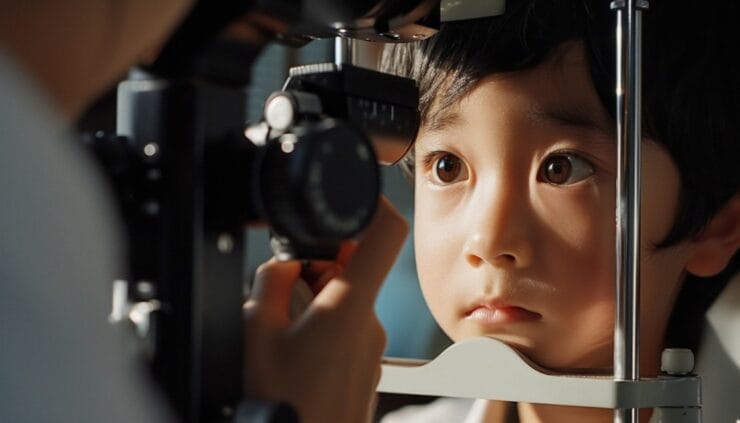
This is why she recommended children undergo vision screening by the age of three and again before entering primary school, saying that refractive errors remain among the most common eye problems in Malaysia and can often be corrected with prescription glasses if detected early.
“If a child tilts their head, squints frequently, sits too close to the TV, or complains of headaches, don’t wait for the school to flag it. Bring them for a proper eye examination. Early detection can mean the difference between simple glasses and lifelong visual impairment,” she said.
On cataracts, Dr Fazilawati said the condition is commonly associated with ageing and typically affects individuals aged over 60, although it may develop earlier among people with diabetes, smokers and those exposed to sunlight.
Cataracts, she said, can cause cloudy vision, glare, faded colour perception and difficulty driving at night, but modern surgical techniques have significantly improved treatment outcomes.
“Modern cataract surgery is far more advanced than many realise. Today’s phacoemulsification technique uses ultrasound to break up the cloudy lens through a small incision.
“Because the procedure involves a smaller incision, recovery is generally quicker and many cases can be performed as day surgery, and most patients return to light activities within a week, with full visual recovery typically within two weeks,” Dr Fazilawati explained.
She also highlighted the growing impact of prolonged screen time, particularly among children and teenagers, saying excessive screen use may contribute to worsening short-sightedness.
She advised the public to practise the 20-20-20 rule by looking at an object about 20 feet away for 20 seconds after every 20 minutes of screen use to reduce eye strain.
Dr Fazilawati also urged adults to undergo eye examinations from the age of 40, and for children, before school begins, while those with diabetes should have annual eye screenings, as diabetic retinopathy can progress rapidly but is treatable if detected early.
“Early detection supports better learning, independence, and quality of life. Postponing exams can lead to missed opportunities for simple treatment,” she added.
— BERNAMA