
 admin
adminPUTRAJAYA – May 1, 2026: Malaysia’s digital transformation is entering a more subtle but decisive phase; one that is less about launching new systems, and more about making trust itself work at scale across the digital economy.
And at the centre of that shift is a growing push to streamline how Malaysians access digital services across government and the private sector, as the country expands the role of MyDigital ID as a shared access layer within its digital ecosystem.
The direction was outlined at the “MyDigital ID: Powering Trusted Access Across Malaysia’s Digital Ecosystem” event, here, yesterday, where policymakers and industry leaders converged on a common challenge: how to translate years of digital investment into experiences that are faster, simpler, and more connected for users.
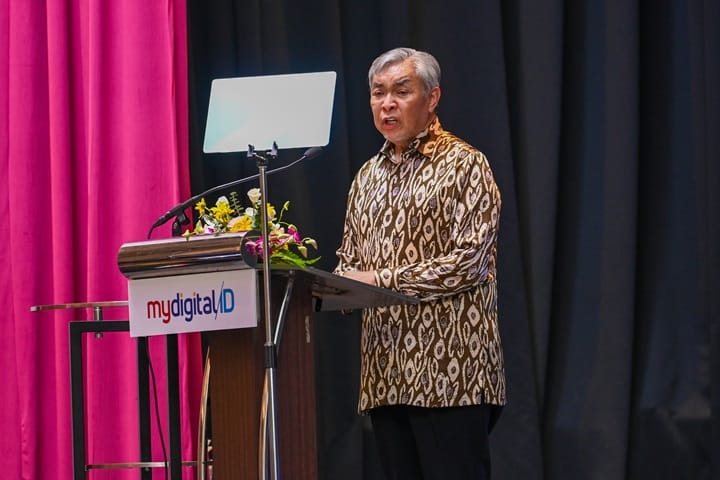
Deputy Prime Minister Datuk Seri Dr. Ahmad Zahid Hamidi framed the issue in broad terms, noting that Malaysia has reached a point where digital services are no longer a differentiator, but an expectation embedded in daily life.
“What was once considered a convenience has now become a necessity. People no longer ask whether services are digital. They expect them to be digital,” he said.
That expectation, Zahid added, is already reshaping the economy.
Malaysia’s digital sector now contributes close to a quarter of national GDP, with digital investments in 2024 alone supporting GDP growth of 5.1 per cent, alongside RM163.6 billion in approved digital investments and the creation of more than 48,000 jobs.
“Digital infrastructure today is no longer a supporting layer. It has become the backbone of how our nation functions,” he said.
But beneath the momentum, Zahid pointed to an emerging tension that sits at the heart of digital adoption itself.
As services become more connected and more data-driven, the risks associated with them are also intensifying. Online scams, identity theft and data misuse, he warned, are no longer isolated incidents but increasingly coordinated and sophisticated threats.
“The more open and connected our digital ecosystem becomes, the more exposed we are to risks that are increasingly advanced and difficult to detect,” he cautioned.
It is in this environment that trust becomes more than a technical requirement. It becomes, as Zahid put it, the condition that determines whether digital transformation accelerates or stalls.
“Ultimately, this challenge comes down to one fundamental question. Can Malaysians trust the systems?” he said. “Because without trust, digital progress loses its meaning. Without trust, adoption slows.”
That framing explains why MyDigital ID is being elevated within Malaysia’s digital strategy. Positioned as a national identity layer, it is intended to provide a single, verified digital identity that can be used across government services, financial platforms and private sector applications.
Zahid described it as a foundation for a “one key” approach, where a single trusted identity enables access across multiple services without repeated verification.
“This is the direction we must move towards,” he said. “A single trusted identity enabling reliable access to multiple services, without friction and without duplication.”
The ambition, however, is not only structural. It is behavioural. Zahid suggested that the end state of Malaysia’s digital ecosystem should feel almost unremarkable to users; not because it is simple in design, but because it is seamless in execution.
“One day, we want every Malaysian to feel that accessing services is no longer a process. It is simply part of everyday life,” he said.
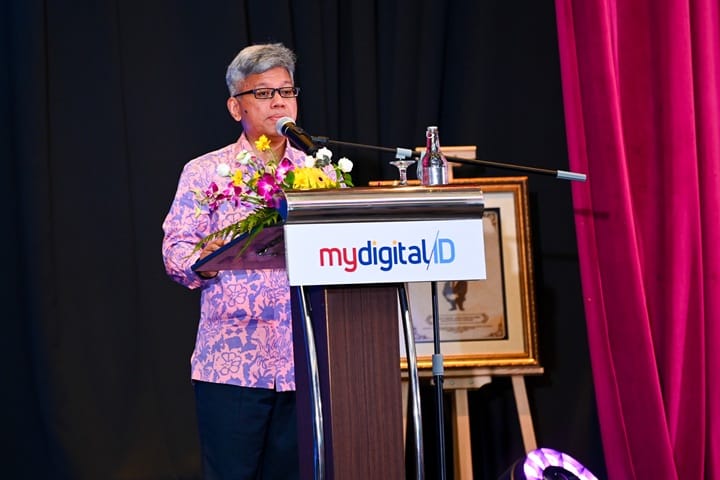
If Zahid’s remarks set out the policy intent, MyDigital ID chairman, Raja Datuk Nushirwan Zainal Abidin focused on how that intent is beginning to materialise on the ground.
The question, Nushirwan remarked is no longer whether digital identity is needed but whether it is becoming embedded deeply enough to fade into the background of daily life.
“A system does not become national infrastructure at the point of its introduction,” he reasoned. “It becomes infrastructure when it is trusted, when it is relied upon, and when it is used without hesitation.”
MyDigital ID has now surpassed 11 million users —11.7 million to be exact— but Raja Nushirwan stressed that scale alone is not the real marker of success. More important, he added, is behaviour, as in how often users return, and whether the system becomes part of routine interactions.
“What matters more is that users are returning, engaging more frequently, and beginning to rely on it as part of their daily interactions,” he said.
Across more than 100 integrated applications — spanning government services, GLCs, GLICs and private platforms — MyDigital ID is gradually being embedded into what he described as Malaysia’s “shared layer of trust.”
Early usage patterns suggest that adoption is accelerating, with login activity nearly doubling in recent months compared to earlier periods.
But beyond usage metrics, the system is also being designed for scale that anticipates future demand.
At peak, it has handled over 140,000 registrations in a single day, while still operating below half of its capacity. The infrastructure, he said, is currently capable of supporting up to 1.3 million registrations daily.
Still, the emphasis was not on volume but on what that volume enables.
Crucially, the system is also designed to reduce visible friction. Security processes operate largely in the background, using cryptographic authentication and real-time risk detection, including the identification of compromised devices or abnormal usage patterns.
“These safeguards are not always visible to users. But they are consistently active in the background,” Raja Nushirwan remarked.
That invisibility, in many ways, reflects the direction both speakers converged on. A digital ecosystem where trust is not repeatedly tested, but quietly embedded.
For industry players attending the forum, the implications are, understandably, practical. Digital onboarding, identity verification and user authentication are among the most persistent friction points in digital services today due to costly to maintain and often disruptive to user experience.
By shifting identity verification into a shared infrastructure layer, MyDigital ID is intended to reduce duplication across systems while improving consistency and security.
Yet the broader ambition extends beyond efficiency.
Both Zahid and Raja Nushirwan pointed toward a longer-term transition: from fragmented digital experiences to an ecosystem where identity, trust and access move with the user across platforms.
If successful, Malaysians may not consciously interact with digital identity systems at all. Instead, they will simply experience faster onboarding, fewer verification steps, and more seamless access to services across sectors.
Or as Raja Nushirwan puts it, when identity truly works at scale, “it ceases to be a process. It becomes part of daily life.”
-AsiaNewsToday