 admin
adminPUTRAJAYA: The initiative to provide discounts for the purchase of electric train tickets (ETS) and the introduction of two monthly travel passes for the Express Rail Link Sdn Bhd (ERL) service is seen as having the potential to be a catalyst for changing the people’s mobility habits, especially among civil servants.
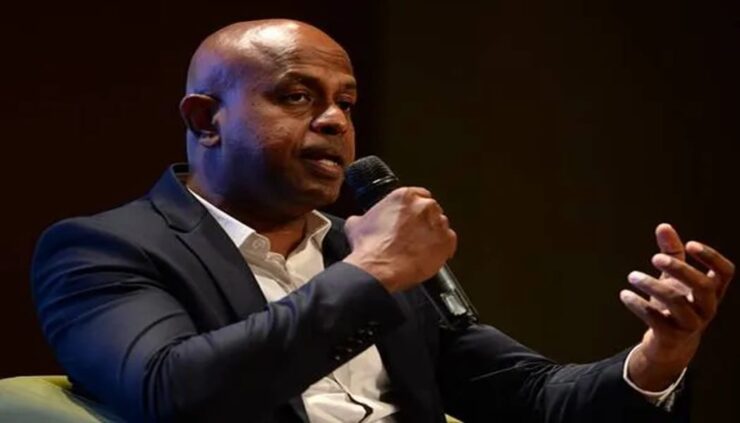
Universiti Sains Malaysia’s Centre for Social Sciences Lecturer Prof Datuk Dr Sivamurugan Pandian said the initiative announced by the Ministry of Transport (MOT) yesterday could increase the attractiveness of public transport as an alternative to private vehicles.
“It has the potential to encourage (the use of public transport) but the effect depends on implementation.”
“Basically, initiatives such as fare discounts and improved access or services can attract new users, especially cost-sensitive commuters. This helps make public transport more competitive compared to private vehicles,” he told Bernama.
Meanwhile, Sivamurugan said the 30 percent discount on ETS ticket purchases would attract marginal users to switch from cars to train services.
“It will reduce the use of petrol or diesel and reduce congestion in the corridors where trains pass.”
“This is a short-term or targeted strategy appropriate for the crisis, which is a response to cost-of-living pressures and global energy price volatility,” he said, adding that the efficiency of train services will further increase the number of users in the future.
Sivamurugan, when commenting on the monthly pass, said the measure had the potential to reduce civil servants’ dependence on their own vehicles, thus helping to reduce fuel consumption and congestion in the country’s administrative centre.
He, however, stressed that the effectiveness of the initiative still depends on the implementation and improvement of overall services.
“Behavioral change is also expected to occur consistently if supported by other factors such as high train frequency, punctuality, comfort and safety. I believe MOT will continue to improve service quality to be effective in the long term,” he said.
Meanwhile, fast food restaurant worker at Kuala Lumpur International Airport (KLIA) Terminal 1 Nur Alyaa Qistina Mohd Bazlisham, 25, said the introduction of the MyKLIA Monthly Travel Card allows her to enjoy higher savings compared to the existing monthly pass.
“If previously I paid RM230 a month for the existing card to travel from Putrajaya station to KLIA, now it is only RM150 for unlimited travel. This means I can save RM80 every month,” he said.
Civil servant Mohd Amir Irfan Mohd Khusairi, 33, described the move as timely in helping workers who rely on public transport every day to get to work.
Mohd Amir Irfan said he previously paid RM4.70 for a one-way trip from his rented house in Putrajaya to Salak Tinggi, Sepang, but with the MyPutrajaya Monthly Travel Card , the cost is expected to be reduced by paying RM75 for unlimited travel for a month.
“This new monthly pass gives me the flexibility to commute without having to worry about additional costs, thus reducing financial stress,” he said.
Yesterday, the government announced a 30 percent discount on the purchase of ETS tickets for all sectors as well as the East People’s Express (ERT) train on the JB Sentral-Tumpat-JB Sentral route as a measure to help the people deal with the rising cost of living following the increase in fuel prices due to the crisis in West Asia.
Transport Minister Anthony Loke said the initiative was implemented in collaboration with Keretapi Tanah Melayu Bhd (KTMB) and ERL services which will introduce two new monthly travel passes, namely the MyPutrajaya Monthly Travel Card specifically for civil servants who work or reside in Putrajaya and the MyKLIA Monthly Travel Card for Malaysians who work at KLIA Terminal 1 and Terminal 2.
— BERNAMA