
 admin
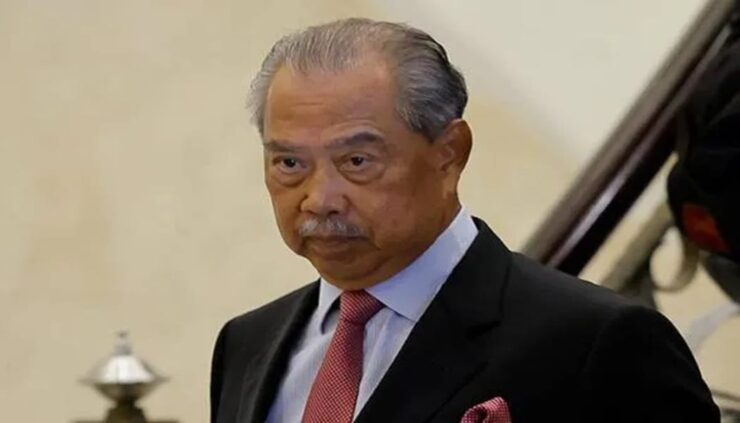
adminKUALA LUMPUR: The trial of former Prime Minister Tan Sri Muhyiddin Yassin on charges of making inflammatory remarks during the Nenggiri State Legislative Assembly (DUN) by-election campaign in Kelantan will begin on Nov 3 at the High Court here.
Judge Datuk Aslam Zainuddin set the trial to last six days, namely on 3, 4, 5, 11, 12, and 13 Nov 2026 after it was agreed upon by the prosecution and defence.
Earlier, lawyer Datuk Amer Hamzah Arshad, representing Muhyiddin, informed the court that his party had requested a trial date for the case to begin after September to allow the Jana Wibawa project case involving Muhyiddin in a different court to be heard first.
“We are ready and have provided 115 sworn statements to the investigation team. We request the prosecution to submit a list of witnesses and written statements for use in the trial,” he said.
Deputy Public Prosecutor Saiful Hazmi Mohd Saad, assisted by Nadia Mohd Izhar, did not object to the matter.
On February 4 last year, Muhyiddin, 78, pleaded not guilty in the High Court here to a charge of uttering inflammatory words during the Nenggiri state by-election campaign at the Felda Perasu Semai Bakti Hall, between 10.30pm and 11.50pm, August 14, 2024.
The inflammatory statement was in relation to the claim that he was not invited by the Yang di-Pertuan Agong after the 15th General Election to be sworn in as Prime Minister, despite allegedly having the support of 115 out of 222 Members of Parliament at the time.
He was charged with committing an offence under Section 4 (1) (b) of the Sedition Act 1948 which is punishable under Subsection 4 (1) of the same act, carrying a fine not exceeding RM5,000 or a maximum prison sentence of three years or both, if convicted.
The case was originally mentioned in the Gua Musang Sessions Court, Kelantan on August 27, 2024, before being transferred to the High Court here.
Muhyiddin requested to transfer the trial of his case to the High Court here, among other reasons, on the grounds that there were complex legal issues and extraordinary difficulties that were expected to arise, particularly in relation to the constitutionality of several provisions under the Sedition Act 1948.
— BERNAMA