
 admin
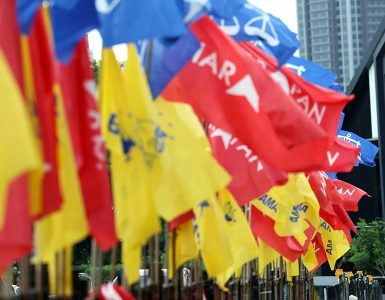
adminKUALA LUMPUR: UMNO and Barisan Nasional (BN) are seen carefully arranging political steps to ensure that the parties are not blamed if the collaboration involving Pakatan Harapan (PH) at the Federal Government level ends.
Political analyst from the University of Malaya, Mohammad Tawfik Yaakub, said UMNO refused to withdraw from the Unity Government because it wanted to avoid the perception that the party was deliberately leaving the government for the sake of power.
According to Mohammad Tawfik, instead, UMNO wants to be removed or ‘expelled’ from the Unity Government so that they can build a narrative that can help with political strategies in the 16th General Election (GE16).
“UMNO is very careful with its political approach or strategy. UMNO does not want to be blamed. If they leave the Unity Government, they want to be removed from the MADANI Government, not withdraw from the government.
“When removed from the government, it will be a burden on UMNO and Barisan Nasional, now they have a new political narrative that they can give to the grassroots.
“That is, UMNO and Barisan Nasional are being persecuted or are no longer accepted in a government that is at the Putrajaya level today,” said Tawfiq in an interview with Astro AWANI , here, on Saturday.
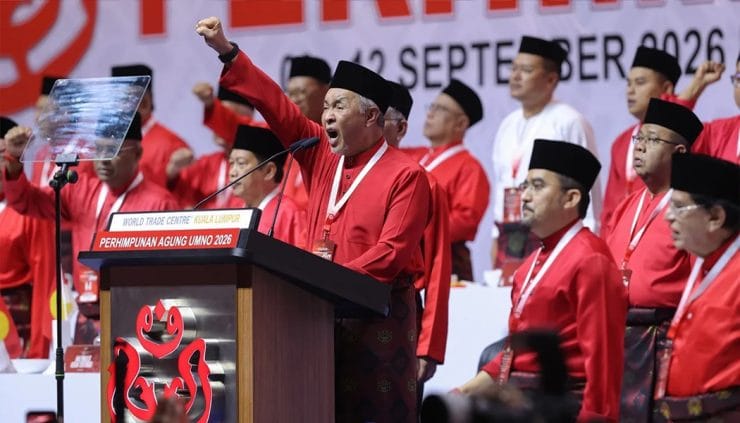
Mohammad Tawfik added that the UMNO leaders’ open criticism of PH, Prime Minister Datuk Seri Anwar Ibrahim and the Unity Government’s cooperation at the 2026 UMNO General Assembly (PAU) can be seen as part of the party’s political strategy.
In the latest development, UMNO President Datuk Seri Ahmad Hamidi confirmed that the party will be with the Unity Government until the end of its term, as it wants to respect its stance, despite the current differences of opinion.
Mohammad Tawfik added that political maneuvering ahead of the 16th GE also involved efforts to gain support from Sabah and Sarawak, including regarding the addition of parliamentary seats.
“If we look at PH, including Datuk Seri Anwar Ibrahim, they have their own agenda, which is why they are so close with Sabah and Sarawak.
“Not only will allocations be increased for Sabah and Sarawak, but at the same time the number of parliamentary seats will also be increased based on the understanding we have seen,” he explained.
On Friday, the government agreed in principle to amend the Constitution to allow for additional parliamentary representatives from Sabah and Sarawak, ensuring that the representation ratio of the two states is improved compared to the current position.
This takes into account the original spirit of MA63 which allocated a ratio of one-third for Sabah, Sarawak and Singapore, before Singapore’s participation ended in 1965.
-Agency