

 admin
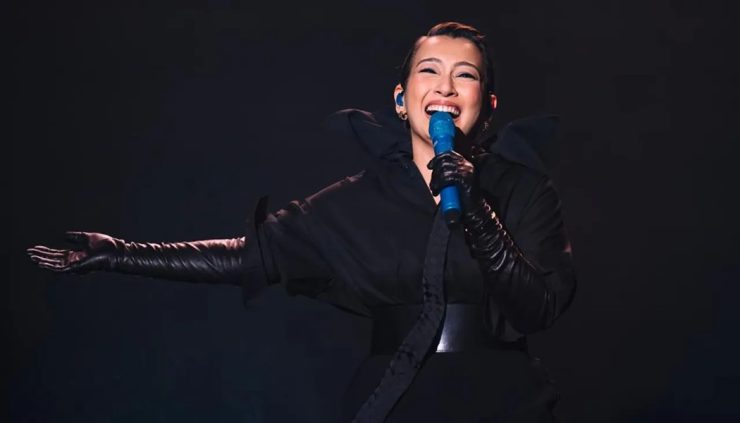
PETALING JAYA: There is something very impressive about Misha Omar that many other singers probably don’t have.
It’s not just her vocal prowess that remains intact after more than two decades. Nor is it because of the constant stream of fresh songs that fans continue to boo. Instead, Misha’s greatest strength is her honesty with herself.
In an industry that often measures success through ticket sales, venue size or production excitement, Misha chooses to look at art from a more honest perspective.
He understands his abilities and capacity as an entertainer.
For him, even a modest-scale performance is enough justification for his vocal abilities, the quality of his music and the relationships he has built with his fans over the years.
If the opportunity presents itself to perform on a bigger stage, it is certainly something to celebrate.
But for Misha, success is never measured solely by the size of the stage.
He always measures clothes on his own body, an attitude that is rare in the entertainment world which is often driven by perception and expectations.
Perhaps that is why his artistic journey has been able to endure until he is 24 years old.
As an observer who has followed Misha’s development since his emergence in the early 2000s, I find the transformation this singer has undergone quite interesting to watch.
In the early stages of his artistic journey, Misha never hid who his inspiration was.
Datuk Seri Siti Nurhaliza, Datuk Sheila Majid and Datuk Syafinaz Selamat are names often mentioned as idols who shaped his taste in music and thinking as a singer.
Like most artists who are searching for an identity, he also once harbored a desire to be like them.
But time teaches an important truth.
After 24 years in the art world, Misha finally found something far more valuable than being like his idol.
He found himself.
He was fortunate to have the opportunity to learn from figures he admired, share the stage and gain experience from them.
But in the end, all that knowledge and inspiration didn’t make Misha a copy of any legend. Instead, the experience shaped his own identity.
Today, fans are not here because they want to see “Misha who looks like Siti”, “Misha who looks like Sheila” or “Misha who sings like Syafinaz”.
They came to see Misha Omar.
And that is the greatest achievement a singer can achieve.
“Thank you to all of you who still love me. I am very touched and honored to see the faces present and the joy on your faces.
“This showcase would not have been successful without your support. Let me thank you for the umpteenth time,” there was a tear at the end of Misha’s speech the other day.
The long journey also shows extraordinary maturity in every aspect of his performance.
Misha’s vocals are still melodious, but now come with more layers of emotion and appreciation.
Each song presented has its own weight, born from life experiences and maturity that cannot be taught through vocal classes alone.
More interestingly, his maturity has not alienated him from his fans.
On the contrary, Misha today appears as a fairly friendly, relaxed and approachable figure.
The way he communicates on stage shows an entertainer who understands the language and culture of today’s generation without having to force himself to be someone else.
He spoke in a relaxed, unpretentious and sincere manner, making the audience feel close to him.
That’s the advantage of an artist who is completely comfortable with themselves.
In that context, Aku & Lelaki is not just a showcase or a thematic experiment.
This performance is actually a translation of Misha’s love for art and deep respect for the career he has built over nearly a quarter of a century.
Some may see the selection of songs by male singers as unusual.
But in reality, the concept was not born because he lacked his own catalog.
Misha has a string of hit songs strong enough to fill a full concert.
The boldness of the concept is evident through the selection of songs that have their own character and challenges.
Misha delivers Lelaki Ini and Keabadian Cinta, which are quite synonymous with Anuar Zain, in addition to reviving emotions through Bahagiamu Deritaku sung by Hafiz Suip.
He also gave his own touch to Tulus’s Teh Hijau, thus demonstrating his vocal versatility across genres and generations.
Among the most captivating segments is the medley that combines Sentuhan Listrikmu by Datuk M. Nasir, Penghujung Rindu popularized by Datuk Jamal Abdillah, and Merisik Khabar sung by the late Datuk Sudirman Arshad.
Many other songs, including his own works, were performed in the two-hour performance.
The selection of songs not only brings the audience back to musical memories that span the ages, but also provides a clear picture of Misha’s broad appreciation for the musical treasures of the archipelago.
More importantly, the selection of these works proves that Aku & Lelaki is not built on a desire to abandon one’s own identity.
Instead, it is a singer’s tribute to the male singers who colored the musical landscape and who also shaped her as an artist.
Misha did not borrow the popularity of the songs, but instead breathed new life into them through interpretations that retained the vocal and emotional identity of Misha Omar.
On the other hand, Aku & Lelaki shows the courage of a singer to continue to challenge herself.
It is a space to test credibility, explore new dimensions in song interpretation and at the same time offer a different experience to fans who have followed his artistic journey for a long time.
The concept of the show was also developed quite elegantly. There was no excessive effort to shock the audience. There was no attempt to create unnecessary sensation.
All that exists is music, respect for the work and the confidence of a singer who understands his strengths.
After 24 years, Misha Omar no longer needs to be someone else to prove her worth.
He just needs to be Misha Omar.
And perhaps therein lies the reason why his name continues to endure, continues to be respected and continues to be loved by fans to this day.
-Agency