
 admin
JOHOR BAHRU, Nov 29 (Bernama) — About 1,300 users have used PaddyChat, an artificial intelligence (AI) platform that lets paddy farmers get guidance on crop pests and diseases via mobile phones.
The platform is among the smart farming initiatives of Universiti Teknologi Malaysia (UTM), involving the Malaysia-Japan International Institute of Technology (MJIIT) and the university’s Centre for AI and Robotics (CAIRO) in collaboration with the Agriculture Department.
UTM’s experience developing applications for the agriculture sector reflects the expertise the government – particularly the Higher Education Ministry (MOHE) – aims to expand by setting up the country’s first AI Faculty at the university.
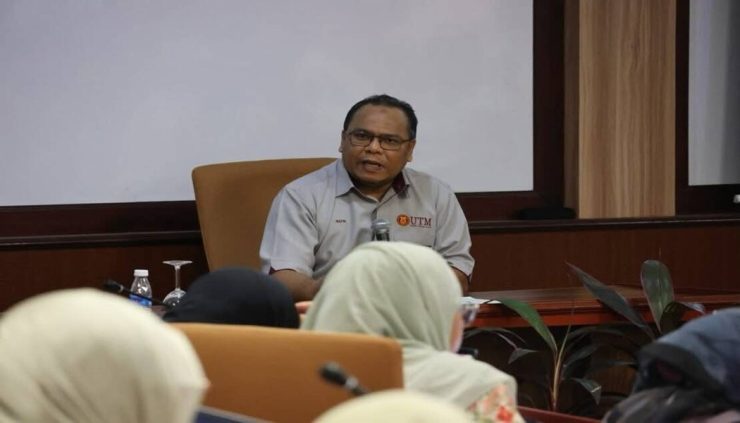
The faculty’s dean, Prof Dr Mohd Naz’ri Mahrin, said the ability to develop homegrown technology is increasingly important for Malaysia as AI use spreads across sectors such as agriculture, manufacturing and services.
“The country risks becoming increasingly dependent on foreign technology if rising demand for AI is not matched by local talent capable of developing models and improving algorithms to meet industry needs,” he told Bernama recently.
Prime Minister Datuk Seri Anwar Ibrahim announced the establishment of the faculty with an initial allocation of RM20 million when tabling Budget 2024 in the Dewan Rakyat on Oct 13, 2023, to expand AI exploration across disciplines.
Mohd Naz’ri said since the faculty was set up on Feb 10, 2024, the Bachelor of Artificial Intelligence with Honours programme, initially offered at UTM Kuala Lumpur, has expanded to UTM Johor Bahru.
At UTM Kuala Lumpur, student intake rose from 114 in the 2024/2025 session to 199 in the following session and 246 for 2026/2027 – more than double the first intake.
UTM Johor Bahru admitted its first batch of 55 students for the 2026/2027 session, bringing the total intake across both campuses for the session to 301.
Mohd Naz’ri said students take 20 core courses covering subjects including mathematics, programming, data management and algorithms before specialising in areas such as machine learning, computer vision and generative AI.
He said RM6.61 million of the initial government allocation was used to acquire high-performance computing servers so students and researchers can process large-scale data and train and test their own AI models.
Overall, RM17.59 million, or 87.96 per cent, of the initial allocation has been spent, including RM4.64 million to upgrade facilities at Menara Razak, UTM Kuala Lumpur, such as lecture rooms and dedicated AI labs.
Among the faculty’s research outputs tested in the field is a rail-based smart camera system to detect early signs of plant disease, developed in collaboration with KMK Agro Global Sdn Bhd in Banting, Selangor.
Mohd Naz’ri said the system uses AI to analyse plant images captured by the camera to help farmers identify crops showing signs of disease that need further inspection.
Beyond research, he said more than 2,500 public- and private-sector staff have attended professional training organised by the faculty since its establishment, while AI-related training generated more than RM1 million for the university from 2025 to 2026.
According to him, training for existing workers is important to meet industry needs in the short term, as degree programmes to produce new graduates take several years.
On the future of AI in Malaysia, Mohd Naz’ri said investments in data centres and digital infrastructure must open opportunities for locals to master expertise as engineers, researchers and system architects.
He said collaboration between universities and industry must give local talent opportunities to train using real technology, take part in joint development projects and fill high-skilled jobs.
According to him, Malaysia can build expertise in areas of direct national interest such as agriculture, healthcare, manufacturing and technology development for local languages.
“Over the next 10 years, Malaysia’s success should not be measured solely by the number of AI users or data centres built, but by the country’s ability to produce experts, develop its own AI technology and generate innovations that deliver economic and social value,” he said.
On AI use in higher education, MOHE secretary-general Datuk Dr Aminuddin Hassim previously said educators must use professional judgement and uphold ethics and academic integrity when applying the technology in teaching.
When officiating at the Polytechnic and Community College Digital Learning Innovation Awards (eDOLA) 2026 in Shah Alam in September, Aminuddin said the success of an innovation should be assessed by its benefits to students and society, including opportunities to learn, work and earn income.
— BERNAMA