
 admin
TUARAN, Nov 11 (Bernama) — The Sabah government is committed to strengthening its customary law institutions through funding allocations to upgrade existing buildings and construct new Native Courts in several districts throughout the state.
Chief Minister Datuk Seri Hajiji Noor said the allocation also covered a proposal to upgrade the Sabah Native Court Complex to support a stronger institutional structure, while elevating the status of customary laws to a more respected and equal standing within the country’s legal system.
He said efforts to enhance the image of the Native Court as a customary law institution were also in line with the approval of the Native Courts Bill 2026 by the Sabah State Legislative Assembly in July.
“The GRS (Gabungan Rakyat Sabah) government’s agenda has never been limited solely to physical and material development, but also encompasses efforts to preserve identity, heritage and customary law institutions.
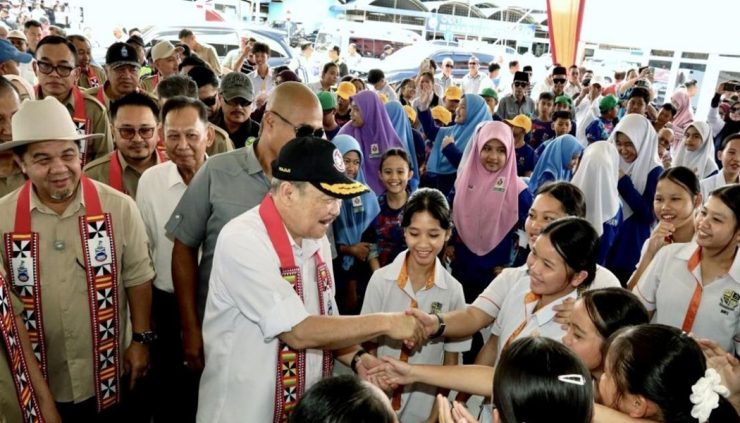
“Sabah is a state rich in cultural diversity, customs and the uniqueness of its native communities. Therefore, safeguarding the dignity and sovereignty of customary laws is a major responsibility borne by the government of the day,” he said in his speech at the inauguration of the Sungai Tuaran Conservation Project and the new Tuaran Town Car Park here today.
Hajiji said the approval of the Native Courts Bill 2026 marked a historic milestone, ending the state government’s long wait to elevate the status of the native customary law system.
He said efforts to strengthen the Native Courts also aimed to modernise the traditional Bumiputera legal system while ensuring that the institution remained effective, relevant and credible in keeping with changing times.
“This initiative is also intended to ensure that its jurisdiction is clearer, more structured and capable of safeguarding and upholding local customary laws,” the Chief Minister said.
He said key reforms introduced under the new enactment included a stronger and more professional judicial structure, with the reorganisation of the court system into a more comprehensive framework comprising the District Native Court, Native High Court and Native Court of Appeal.
He said the positions of Chief Judge and Chief Justice, as well as Native Court prosecutors and registrars, had also been established.
“The appointment of judges is now planned on a merit-based system to ensure high standards of integrity and credibility,” he said.
Hajiji said the strengthening exercise also involved a clearer separation between administrative and customary affairs and judicial functions, while preserving the traditional roles of customary officers such as district chiefs and native chiefs to maintain the customary roots of Sabah’s communities.
— BERNAMA