

 admin
adminKUALA LUMPUR, Oct 7 (Bernama) — Malaysia’s National Statement at the upcoming 31st United Nations Climate Change Conference (COP31) from Nov 9 to 20 in Antalya, Turkiye, will centre on five core strategic pillars, namely commitment, transparency, carbon economy, policy and climate diplomacy.
Ministry of Natural Resources and Environmental Sustainability (NRES) Climate Change Division deputy undersecretary Raffidi Abdullah said the commitment pillar will spotlight Malaysia’s updated Nationally Determined Contribution (NDC) 3.0, while the transparency will focus on the submission of the country’s inaugural Biennial Transparency Report (BTR).
“The third pillar is the carbon economy, particularly the implementation of Malaysia’s International Compliance Carbon Market. The fourth is policy, reaffirming the International Climate Change Policy 2.0 and the National Climate Change Bill.
“The fifth, climate diplomacy, will articulate Malaysia’s commitments and national position. Together, these pillars demonstrate that Malaysia remains committed to global climate action while ensuring that our transition is practical, equitable, and supportive of national development priorities,” he said during the Road to Antalya: Climate Change Forum here, today.
The statement is to be delivered by NRES Minister Datuk Seri Arthur Joseph Kurup.
Raffidi said Malaysia’s position would balance global climate ambition with national development priorities, guided by equity and the principle of common but differentiated responsibilities and respective capabilities.
He said NDCs must remain nationally determined, while greater climate ambition should be supported by adequate finance, technology transfer, and capacity building without creating new burdens beyond the Paris Agreement.
Raffidi said Malaysia would also stress accessible climate finance, flexible adaptation measures and recognition of national circumstances, including energy security and the role of natural gas as a transition fuel.
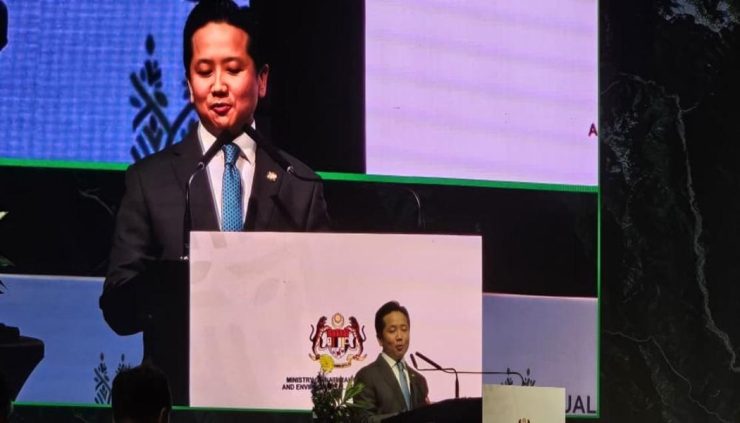
Earlier, Arthur in his welcome remarks said Malaysia would go to COP31 not merely to state its commitments, but to showcase its climate action, partnerships and how climate action can drive resilient, inclusive and sustainable economic growth.
He said Malaysia remained committed to net-zero greenhouse gas emissions by 2050, with NDC 3.0 targeting emissions to peak between 2029 and 2034, followed by an absolute reduction to 50-30 million tonnes of carbon dioxide equivalent by 2035.
Arthur said achieving the targets would require transformational action across sectors and stronger collaboration among the government, industry, academia, civil society and local communities.
“Climate action should not be viewed solely as an environmental obligation. It is an opportunity for economic transformation, creating new industries, green investment, new technology and innovation, sustainable finance and green jobs,” he said.
Meanwhile, Turkish Ambassador to Malaysia Dr Nevzat Uyanik said Malaysia is well-positioned to contribute to global climate discussions, given its natural resources, biodiversity, and growing economic and technological capabilities.
He said Malaysia’s position in ASEAN also enabled it to bring regional perspectives to common challenges, including haze, floods, heatwaves, deforestation, drought, air pollution and energy transition.
Uyanik said Turkiye’s zero-waste initiative and Malaysia’s move towards a circular economy reflected shared approaches in addressing waste and promoting more sustainable development.
He also proposed that Malaysia and Turkiye spearhead an environment and climate cooperation platform for developing countries at COP31 in Antalya.
— BERNAMA