

 admin
KUALA LUMPUR: Malaysia needs to shift from a reactive approach to a more proactive approach based on intelligence, analytics and predictive capabilities to address increasingly sophisticated cyber threats, including attacks using artificial intelligence (AI).
Communications Ministry Secretary-General Datuk Abdul Halim Hamzah said the ability to detect threats early and act quickly is important to ensure the security of critical infrastructure and the country’s digital systems continues to be maintained.
He said the emergence of AI technology has significantly changed the cybersecurity landscape as the technology can not only be used to detect anomalies and system weaknesses, but can also be exploited to produce more sophisticated attacks.
“However, it can also be exploited to produce more sophisticated attacks, including deepfake -based fraud and automated attacks,” he said when delivering the closing speech at NEXSEC 2026 here on Thursday.
In this regard, he encouraged government agencies and industry players to explore new solutions, strengthen research and development (R&D), expand the use of security technology and develop local capabilities.
Abdul Halim said cybersecurity is no longer simply a technology issue or the technical responsibility of an organisation, but rather also involves national security, digital sovereignty, economic confidence and the well-being of the people.
He said threats such as ransomware attacks, phishing, identity theft, data leaks and attacks on critical infrastructure required closer collaboration between government ministries and agencies, the private sector, digital service providers, higher education institutions and international partners.
“Instead, such cooperation needs to be translated into concrete actions through sharing threat intelligence, coordinating incident responses, simulation exercises, developing security standards and effective recovery mechanisms,” he said.
At the event, Abdul Halim also presented prizes to the winners of the NEXSEC 2026 Capture The Flag (CTF) competition in the university category, which saw the Perisai+ group from the International Islamic University Malaysia (IIUM) emerge as champions, taking home RM3,000 in cash, a plaque and an EC-Council certificate.
The runner-up was the PWNcookies group from the Asia Pacific University of Technology and Innovation (APU) who received a cash prize of RM2,500, a plaque and a certificate, while third place went to the iphonekupi group from the University of Kuala Lumpur (UniKL) with a prize of RM2,000 along with a plaque and a certificate.
Meanwhile, Perisai+ group representative Mohammad Danish Hakim Mohd Nasir, 22, said the success was the result of improvements and more intensive training after only finishing third in last year’s NEXSEC edition.
Mohammad Danish Hakim, who was paired with Muhammad Muhaimin Ridzuan and Muhammad Afiq Danial Mohd Bacho, said CTF is a cyber exercise that requires participants to think like an intruder to penetrate a system, thus identifying the best method to protect the system from real threats.
“The main challenge this time is the ban on the use of AI because this is to hone the natural talent of each player, but the experience of participating in various competitions at the university and ASEAN levels previously helped us a lot to successfully win first place today,” he told the media after the closing ceremony.
Mohammad Danish Hakim also expressed the hope that more such platforms would be organised in the future to provide opportunities for more young people to showcase their talents, especially in the field of cybersecurity.
Meanwhile, for the Technology Innovation Exhibition competition, first place was won by the CyberScout AR Project: Mobile Application for Cybersecurity Awareness from Universiti Sains Islam Malaysia (USIM) which took home a cash prize of RM1,000, a trophy, a plaque and an EC-Council certificate.
Second place went to Pentree Project: From Attack to Assurance – AI-Powered Autonomous Penetration Testing for Audit-Ready Cybersecurity from APU which received RM750 and a plaque, followed by Ruang Aman Project: AI-Powered Online Hate Speech Detection from Universiti Malaya (UM) in third place with a prize of RM500 and a plaque.
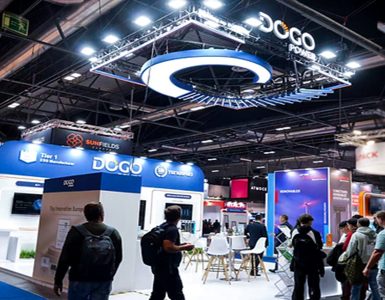
NEXSEC 2026, organised by the Malaysian Communications and Multimedia Commission (MCMC), took place yesterday and today, bringing together government representatives, security agencies, industry, higher learning institutions and representatives from ASEAN member countries to strengthen the country’s cyber preparedness and resilience.
— BERNAMA